
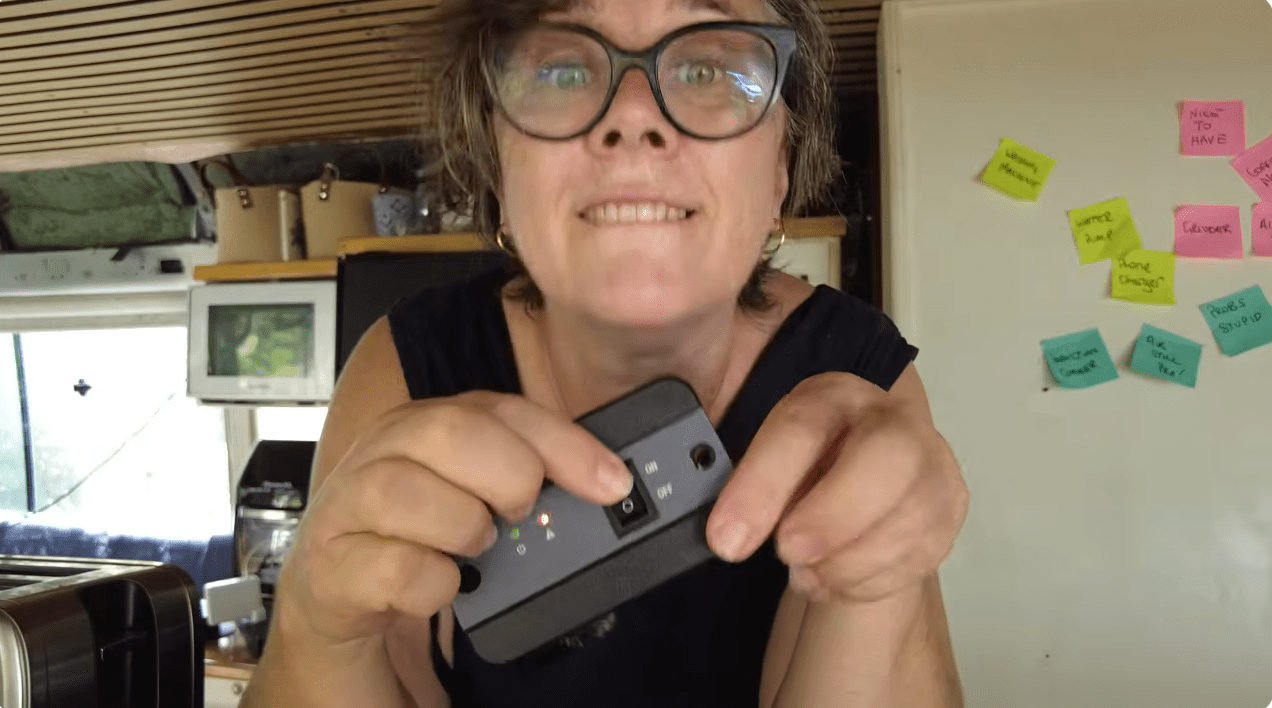
I finally worked out what was going on with my solar system.
It’s fixed.
It’s working.
And — most importantly — I actually understand it now.
If you’re new to vanlife solar and every time someone starts talking about amps and watts your brain quietly exits the building, this one’s for you. Because that was me.
This isn’t a wiring tutorial. I’m not going to pretend to be an electrician. What I am going to do is explain what I bought, why I bought it (after a LOT of advice from you legends), how the whole system fits together, and what you actually need to think about if you’re setting up your own.
The biggest mistake I made? Starting in the wrong place.
So instead of beginning with panels or batteries, we’re starting with the one thing almost nobody talks about first — and it’s the thing that makes everything else work.
🎥 Watch the Video
If you’d rather see the system in action (and me climbing ladders in a dress like an idiot), you can watch it here:
🗺️ What This Video Covers
- The most important first step before buying anything
- Why working out what you want to run changes everything
- AGM vs lithium batteries (and why I upgraded)
- Solar panels: what they actually do
- PWM vs MPPT controllers
- Why I chose a 60A MPPT
- My breaker switch trick for managing big house panels
- Inverters: what they do and why size matters
- Why a battery monitor and shunt are game changers
- Safety: cables, fuses, and not burning your van down
📍 The Story Behind the Scenes (300–500 words)
The biggest shift for me was realising that solar isn’t about panels first.
It’s about what you want to run.
If you go online and ask, “How much power do I need?” you’ll get wildly different answers. Some people are charging a phone and running a butane cooker. Others are running induction cooktops, microwaves, coffee machines, and — in my case — a still.
Unless you know what you are running, the rest is guesswork.
Once I worked that out, everything else followed.
Batteries
The bus came with two 100Ah AGM batteries. They weren’t cutting it. AGM batteries can only safely be drained to about 50%, whereas lithium can go down to around 10%. That’s a huge difference in usable power.
So I upgraded to two 300Ah lithium batteries (yes, they were on sale — decision made quickly). Practically, that’s given me roughly 500 extra usable amp hours.
They’re bigger. They barely fit. There was a ventilation moment of panic. But they’re in.
Solar Panels
I installed three 315W house panels on the roof — bargain panels that installers are often trying to offload.
Important thing: in a van setup like mine, the panels don’t directly run your appliances. They charge the batteries. Your appliances run from the batteries.
So the job of your panels is to refill what you use — and to do it even on less-than-perfect weather days.
Solar Controller (MPPT vs PWM)
This is the brains between the panels and the batteries.
I replaced my old PWM controller with a 60A MPPT controller. It’s more efficient and handles higher input better — which matters when you’ve got three big house panels feeding into it.
And here’s the cool bit: I installed a breaker that allows me to switch one panel off. On stinking hot, full-sun days when everything’s topped up, I can reduce load and avoid overheating. On cloudy weeks? Flick it back on and maximise input.
Flexibility.
Inverter
The inverter converts 12V battery power into 240V so I can run normal appliances.
I chose a 3000W inverter because heating appliances spike above their labelled wattage when they first turn on. My induction cooktop is 2000W. My microwave is 1200W. I wanted headroom.
Undersize your inverter and it’ll just beep at you and refuse.
Battery Monitor & Shunt
This tiny device gives me better real-world information than the big flashy controller display. It shows me net usage — solar in minus power out.
When it starts reading negative in the late afternoon? That’s my cue to stop charging things.
Game changer.
Safety
Fat cables matter.
Fuses matter.
Breakers matter.
Electricity does not like skinny wires when you’re running big loads. I broke something by moving cables around too much. Lesson learned.
And yes — this is still going to professionals for final checks before everything gets neatly boxed in.
🧠 Things I Learned
- Start with what you want to run, not what panels to buy
- Lithium gives you far more usable capacity than AGM
- Solar panels charge batteries — they don’t magically power everything directly
- MPPT controllers are more efficient than PWM
- You can absolutely have too much solar if it’s not matched correctly
- Real monitoring reduces stress dramatically
- Safety components are not optional
🔗 Related Videos / Posts
- Why My Batteries Kept Going Flat
- Installing My New Inverter and Lithium Batteries
- Planning My Electrical System from Scratch
💬 Over to You
If you’re setting up a van right now, what’s the one appliance you refuse to give up?
And do you want a proper beginner-friendly breakdown of amps, watts, and how to calculate your usage — without the brain explosion?
Let me know in the comments.
Discover more from Helen Wheels - Solo Female Van Life
Subscribe to get the latest posts sent to your email.

