Water leaks in a camper or bus conversion are one of those problems that seem small… right up until they aren’t.
In my case, it started with a wet floor mat.
Then I found a mushroom.
That’s generally nature’s polite way of saying, “You’ve been ignoring this for a while.”
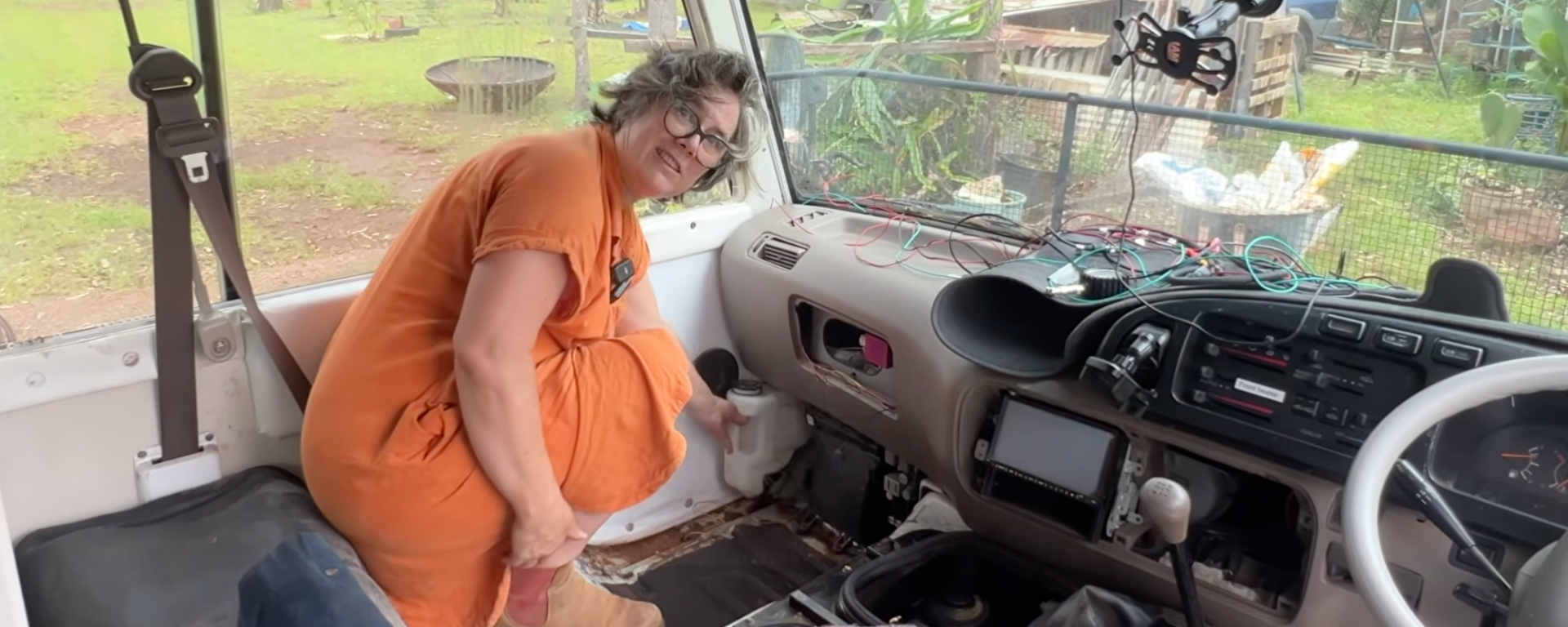
What I hoped would be a quick afternoon fixing a tiny leak quickly turned into pulling apart the entire front of my Toyota Coaster to see just how bad things really were.
As much as I would have preferred to pretend it wasn’t happening, water has a nasty habit of turning small problems into expensive ones. Left alone, it can soak insulation, rot timber, create mould, ruin upholstery and, worst of all in an older bus, cause rust that can become incredibly expensive to repair.
So if you’ve discovered damp carpet, mysterious puddles or condensation that just doesn’t seem right, here’s exactly what I learned from tearing my bus apart.
In This Article
You’ll learn:
- How I discovered a hidden water leak in my Toyota Coaster
- The most common places camper and bus leaks come from
- Why wet carpet should never be ignored
- How to investigate leaks without making the problem worse
- Why Toyota Coaster windscreens often cause trouble
- What I discovered after stripping out the front of the bus
- The biggest lessons I learned from the whole experience
Prefer to Watch?
This article is based on my YouTube video. If you’d rather watch the project unfold (including the moments where everything starts looking far more expensive than I’d hoped), you can watch it here.
It Started With a Wet Floor Mat
I wasn’t even looking for a major problem.
I simply noticed the floor mats at the front of the bus were soaked.
Not just damp.
Properly soaked.
When I lifted one up, I found something I definitely wasn’t expecting…
A mushroom growing underneath it.
Now, unless you’ve accidentally started your own indoor mushroom farm, that’s a pretty good indication the area has been wet for quite a while.
At that point I knew I had two choices:
- Ignore it and hope for the best.
- Pull everything apart and find out what was really going on.
Unfortunately, option two was the only sensible one.
Why Water Leaks Are Such a Big Deal in Camper Conversions
Whether you’re converting a Toyota Coaster, a van or a motorhome, water is one of the biggest enemies you’ll ever face.
A leak often starts somewhere completely different from where you actually notice the water.
It might drip behind panels, run down inside pillars or travel underneath flooring before finally appearing metres away from the source.
That’s why simply drying the carpet rarely fixes anything.
Hidden water can cause:
- Rust in the bodywork
- Mould and mildew
- Rotten timber
- Wet insulation that no longer works properly
- Bad smells
- Electrical problems
- Expensive structural repairs later on
The sooner you investigate, the cheaper the repair usually is.
Pulling the Bus Apart Was the Only Option
I’d secretly hoped I could lift one panel, tighten one bolt and declare victory.
Instead, I ended up removing:
- Front seats
- Interior trim
- Floor coverings
- Various panels
- Front grille
- Mirrors
- Wiper assembly
- Bull bar
Basically, if it was attached to the front of the bus, there was a fair chance it was coming off.
Living in your bus while renovating it makes jobs like this particularly entertaining.
Every part you remove has to go somewhere.
Suddenly your home turns into a giant game of automotive Tetris.
Unexpected Discoveries (Including a Hidden Drawer!)
One of the funny things about dismantling an older vehicle is discovering features you never knew existed.
While removing the seats I found a little storage drawer I’d completely forgotten about.
Sadly it wasn’t full of forgotten cash.
That would have been handy considering what I was starting to suspect this repair might cost.
The good news was that, despite years of use, the seats themselves were actually in excellent condition once the covers came off.
Sometimes pulling things apart gives you the chance to clean years of dust, sand and grime that you’d otherwise never reach.
Following the Water Trail
Once the flooring started coming up, the extent of the moisture became obvious.
Parts of the underside were absolutely soaked.
That was actually useful.
Water usually leaves clues.
Rather than randomly guessing where it entered, I followed the damp areas backwards to where they were wettest.
Everything kept pointing towards one area.
The windscreen.
Are Toyota Coaster Windscreens Known for Leaking?
Unfortunately…
Yes.
If you spend much time talking to Toyota Coaster owners, leaking windscreens come up surprisingly often.
The leak isn’t always caused by the glass itself.
Common causes include:
- Ageing rubber windscreen seals
- Rust hidden beneath the seal
- Poor previous repairs
- Blocked drainage paths
- Failed sealants
- Tiny gaps created over decades of vibration
Sometimes replacing the seal fixes everything.
Sometimes you discover something much uglier hiding underneath.
Unfortunately, there’s only one way to know for sure.
Take the windscreen out.
Removing a Bus Windscreen Isn’t Something to Rush
This was the point where the project became slightly terrifying.
Because there’s one obvious problem.
If you crack the windscreen while removing it…
…you’re suddenly buying a new windscreen.
For older buses, that’s not always cheap or easy.
Rather than trying to force it ourselves, we organised someone experienced to help remove it safely.
Before they arrived, we stripped everything possible off the front of the bus to make access easier.
That included removing mirrors, trim and carefully scraping away sealant we’d previously applied while trying to stop the leak.
Spoiler alert…
That sealant hadn’t solved the problem.
Don’t Assume Sealant Will Fix a Leak
Like many owners, my first instinct had been to seal around the outside.
Sometimes that works.
Sometimes it simply traps water where you don’t want it.
If the leak is actually coming from rust hidden beneath the seal, adding more sealant usually just delays the inevitable.
It’s worth diagnosing the cause before reaching for another tube of silicone.
Every Repair Becomes Three More Jobs
One thing I’ve learned during this entire bus conversion is that nothing exists in isolation.
Take one part off…
…and suddenly you notice three other things that would be much easier to fix while you’re there.
With the front stripped down I started thinking:
- Should I repaint the mirrors?
- Should I touch up stone chips?
- Should I treat surface rust?
- Should I repaint the front panel?
It’s a dangerous way to think.
But it often saves doing the same labour twice later on.
What We Found Under the Front End
Thankfully, removing the bull bar and front trim didn’t immediately reveal catastrophic rust.
That was a huge relief.
Everything actually looked better than I’d expected.
Unfortunately…
The real test was still to come.
Until the windscreen came out, we simply couldn’t see what was happening underneath the seal.
The Moment of Truth
Whenever you investigate hidden water damage, there’s usually a moment where reality finally catches up.
You’re hoping for:
“Just a cracked seal.”
You’re preparing yourself for:
“Please don’t be structural rust.”
As sections of the seal lifted away, we started getting our first glimpse underneath.
Some areas looked encouraging.
Others…
Not so much.
Enough to know there was definitely more work ahead.
Why Finding the Problem Early Matters
As frustrating as this project became, I’m actually glad I found the leak when I did.
If I’d simply thrown another floor mat over the top and ignored it, the moisture would have continued sitting against the steel floor.
Rust doesn’t stop growing because you stop looking at it.
Finding the problem early gave me the chance to repair it before it became even worse.
Sometimes the expensive job today saves you from the truly eye-watering job in five years’ time.
Lessons Learned
If this experience taught me anything, it’s these lessons:
- Never ignore wet carpet in a camper.
- A tiny puddle can indicate a much bigger hidden problem.
- Water rarely appears where it actually enters.
- Don’t assume adding more sealant will solve every leak.
- Strip back enough to inspect properly rather than guessing.
- Older Toyota Coasters are well known for windscreen leaks, so they’re worth checking carefully.
- While everything is apart, clean, inspect and treat any surface rust you find.
If I Did It Again…
I’d investigate the leak much sooner.
Finding a mushroom growing under the mat probably should have been my first clue that procrastination wasn’t the best maintenance strategy.
I’d also spend less time trying to convince myself it was “probably nothing”.
Water has an annoying habit of proving you wrong.
Even though pulling apart half the front of the bus felt overwhelming at the time, it was absolutely the right decision.
At least now I know what’s hiding underneath instead of wondering every time it rains.
And honestly?
Sometimes the only way forward with an old bus is to stop being scared of what you might find and just start undoing bolts.
Read Next
You might also enjoy:
- The Hidden Fire Risk I Found in My Bus Insulation
- How Much Has My Toyota Coaster Conversion Cost So Far?
- My Bus Solar System Made No Sense — So I Rebuilt It
- Renovating My Camper Bathroom From Scratch
- Living in a Bus While Renovating It: The Reality Nobody Shows
🚐 Want More Like This?
If you’re enjoying the chaos and want to follow along as I figure this all out (sometimes successfully, sometimes… not 😬), you can:
👉 Subscribe for updates when new blogs and videos go live
Discover more from Helen Wheels - Solo Female Van Life Adventures
Subscribe to get the latest posts sent to your email.

